
Why Refresher Training Matters More Than Ever in 2026
As we move into 2026, refresher training is becoming increasingly important across land-based, forestry, agricultural and amenity industries. While many operatives hold the correct qualifications, maintaining ongoing competence is now just as critical as gaining an initial certificate.
Refresher training plays a key role in keeping skills current, reducing risk and ensuring compliance with industry expectations and legislation.
Competence Is Not a One-Time Achievement
Holding a certificate demonstrates that an individual was competent at the time of assessment. However, skills can fade, equipment evolves and best practice changes. Regulators and industry bodies increasingly expect employers to demonstrate that competence is maintained, not assumed.
Refresher training helps to:
- Reinforce safe working practices
- Address bad habits that may develop over time
- Update operators on changes in legislation or guidance
- Improve confidence when using equipment
This is particularly relevant for high-risk activities such as chainsaw operation, pesticide application and machinery use.
Increased Focus from Employers, Insurers and Auditors
In 2026, many organisations face greater scrutiny around training records and competency management. Employers are expected to show that workers are not only qualified, but currently competent.
Refresher training is often requested during:
- Health and safety audits
- Insurance reviews
- Contract tendering processes
- Internal risk assessments
For employers, refresher courses are a practical way to demonstrate due diligence and fulfil their duty of care.
Changes in Equipment, Techniques and Best Practice
Tools, machinery and application methods continue to develop. Refresher training allows operators to stay up to date with:
- New or updated equipment
- Safer or more efficient working techniques
- Environmental protection measures
- Industry-led best practice
Even experienced operatives benefit from reviewing core principles in a structured training environment.
Supporting a Strong Safety Culture
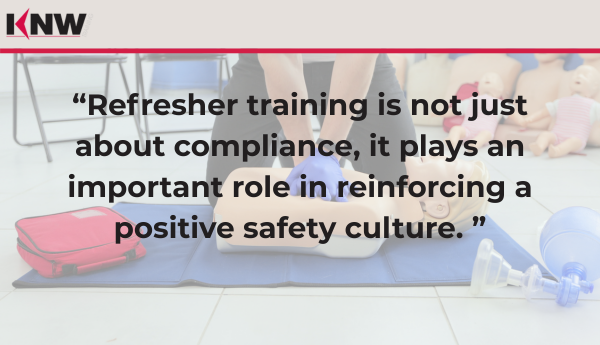
Refresher training is not just about compliance, it plays an important role in reinforcing a positive safety culture. Regular training helps normalise safe working practices and encourages open discussion around risks, near misses and improvements.
For teams and organisations, refresher courses can also help ensure consistent standards across the workforce.
When Should Refresher Training Be Considered?
While refresher intervals vary depending on the activity and risk level, refresher training is commonly recommended when:
- Certificates are several years old
- An operator has had a break from the task
- New equipment or methods are introduced
- A near miss or incident has occurred
- An employer or insurer requests evidence of ongoing competence
Planning refresher training early can help avoid disruption later in the year.
Refresher Training with KNW Training
KNW Training offers refresher courses across a wide range of disciplines, including chainsaws, pesticides, machinery and other land-based skills. Courses are designed to be practical, relevant and aligned with current industry expectations.
Refresher training can be delivered through open courses or on-site for organisations, helping individuals and teams remain competent, compliant and confident in their roles.
Looking Ahead to 2026
As expectations around competence continue to evolve, refresher training is no longer an optional extra, it is an essential part of professional development and risk management.
Investing in refresher training at the start of 2026 can help individuals and organisations set strong foundations for the year ahead.
Contact the KNW Team for more information on refresher courses
We provide an extensive portfolio of Training Courses
KNW offer an extensive range of both assessed and non-assessed training courses.